A simple written plan changes that. When the nanny knows exactly what to do each day, your child gets more play, more talking and less screen time.
Step by step
- 1Give one clear plan per day
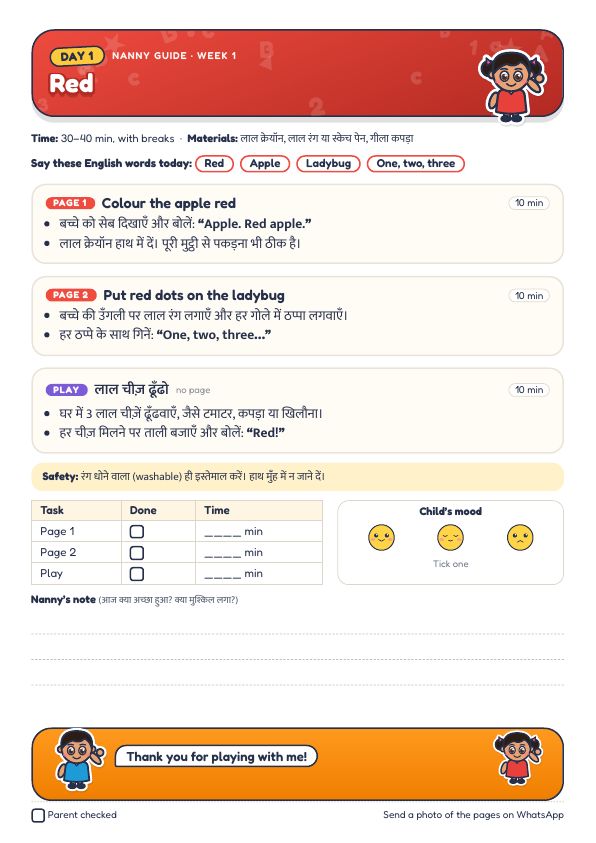
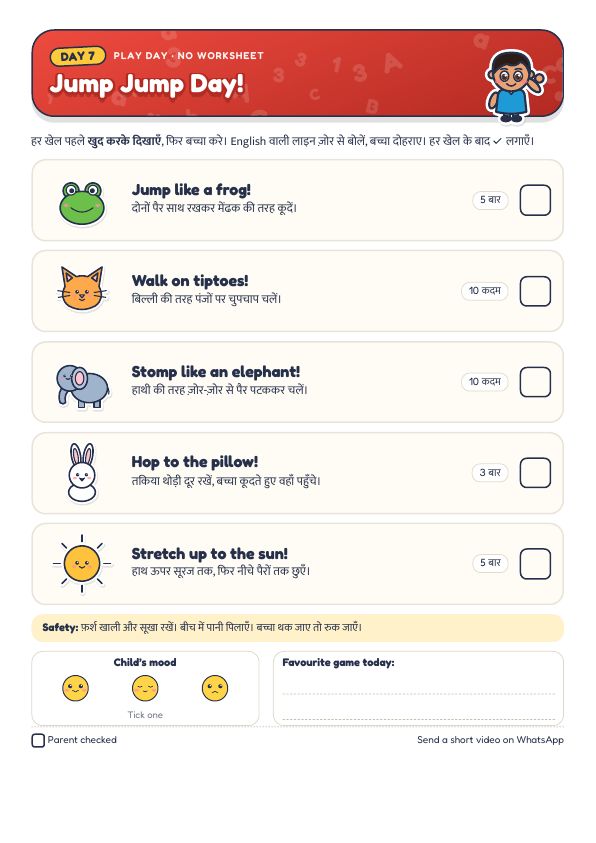
Not a long list of ideas, but exactly what to do today: page 1, page 2 and one game.
- 2Write instructions in her language
If your nanny reads Hindi, give the steps in Hindi. The worksheets can still be in English.
- 3Keep it short
Three activities of 10 minutes each is enough. A tired nanny will not follow a long plan.
- 4List the materials
Crayons, glue, a spoon, a ball. Things already in the house.
- 5Add a tick-box report
Done or not done, minutes spent, and the child’s mood. It takes the nanny 1 minute.
- 6Ask for a photo
A WhatsApp photo of the finished page lets you see the day from your office.
See it on paper
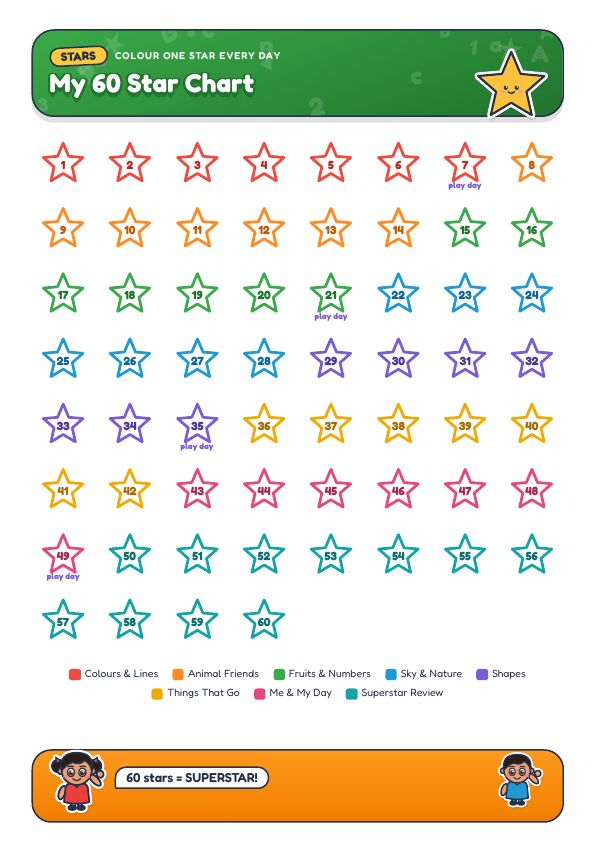
These pages come from the TAILR Daily Workbook for Kids, a 60-day printable plan for ages 2–3.
Tips for parents and nannies
- Thank your nanny when the plan is followed. Appreciation keeps the routine going.
- Check the tick-boxes every evening, even if only for 2 minutes.
- Start with one week and build the habit slowly.
Questions
How can I make sure my nanny is engaging my child?
Give a simple daily plan with a tick-box report, and ask for a photo of the finished activity.
My nanny does not read English. What can I do?
Use a plan where the nanny’s instructions are in Hindi or her language, while the child’s worksheets stay in English.
How much screen time is okay for toddlers?
Many paediatric guidelines suggest very little screen time for children under 2 and limited, quality viewing with an adult for ages 2 to 5.